
English level: B2-C2
June 21st marks the longest day of the year in the northern hemisphere, which we call the summer solstice.
What is Stonehenge?
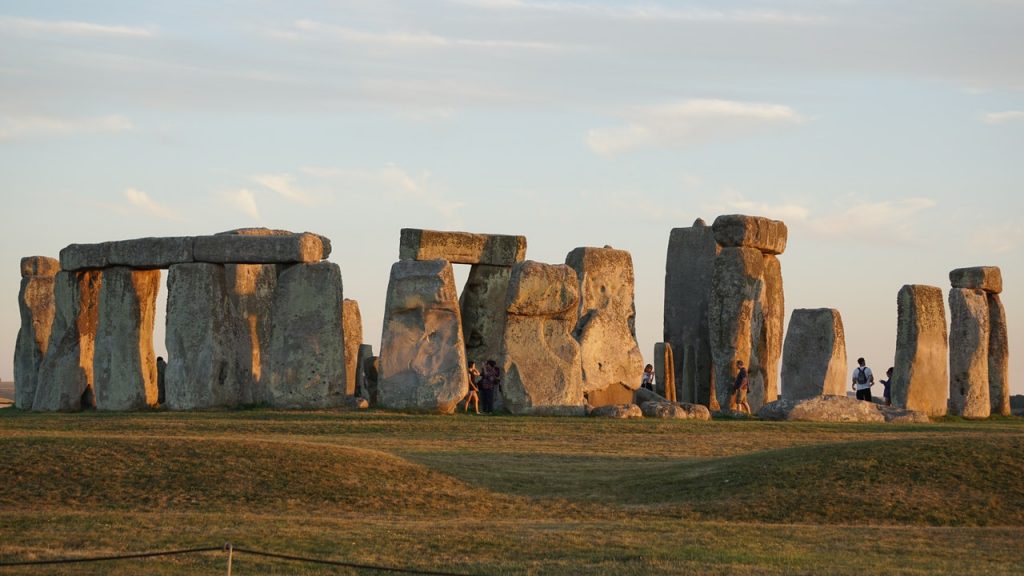
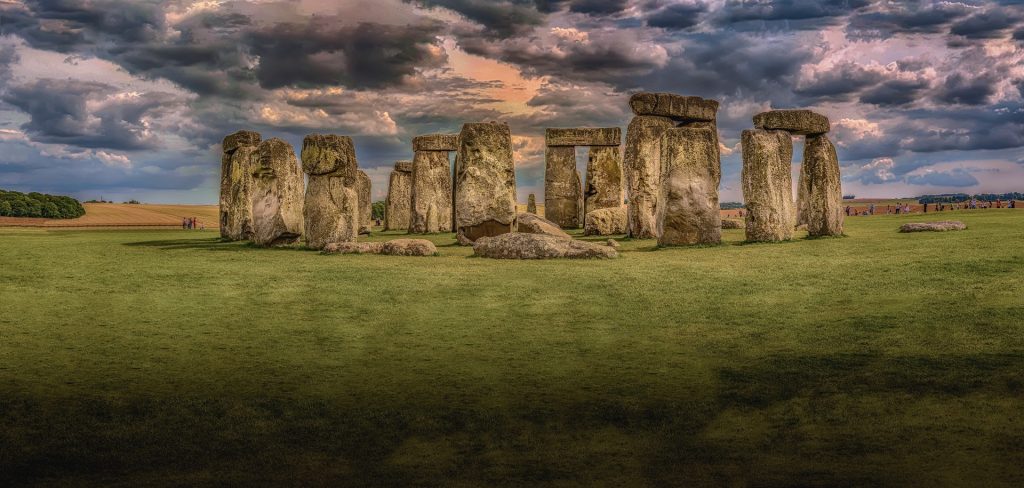
In Britain, there is a very famous celebration of the summer solstice at Stonehenge. If you don’t know, Stonehenge is a circle of stones which were placed in Wiltshire, England around 4,500 years ago. A ‘henge’ is a name for a prehistoric monument made out of stones or wood, normally stood up in a circle. These stones were carefully positioned to align with the sun’s movements so that on the longest day of the year, when the sun rises, it would be framed perfectly within the gap of two stones. It is thought that members of the ancient civilization gathered here on this day to perform rituals and ceremonies to celebrate. Of course, we will never know the exact reasons why. We now believe that it was viewed as a moment of connection between the powers in the sky, and the humans on earth. It also could have acted as a calendar, a meeting place, a final resting place for royalty, a site for healing with magical powers, or a site of religious pilgrimage. As these ancient civilizations left no written records, we will never know for sure. All that is certain is the connection to the summer solstice.
How was Stonehenge built?
Although it seems unbelievable, it actually would have been very possible for humans to track the precise movements of the sun thousands of years ago by tracking it in the sky. The stones themselves also have an unbelievable history. Stonehenge is located in the South West of England, however, the stones that it is made out of can only be found in Pembrokeshire, over 200km away, in the west of Wales. This means that the early community that built Stonehenge rolled and pushed these huge stones all this way, around the year 2,500BC! Stonehenge isn’t the only henge in the area, there is also nearby Woodhenge, Averbury Stone Circle, and many other smaller prehistoric landmarks in this area. However, Stonehenge is the most famous henge worldwide due to the sophistication of the architecture. With limited tools, it is incredibly impressive that cavemen were able to build this complicated structure, which has remained standing for nearly 5,000 years.
How do people celebrate today?
The history of Stonehenge is very mysterious, but the one thing we know for certain is its important relation to the summer solstice. Today, there are still huge celebrations every year at Stonehenge. Many people use it as an opportunity to experience a beautiful sight, or connect to history. But for others, the event holds religious importance. Druidry is a spiritual movement focused on connecting with the natural world. Environmental protection is one of their top priorities, and they share many links with the ancient Celtic Druids from hundred of years ago. To this group, the solstice represents death and rebirth. Druids use this time to let go of things which are holding them back, through various rituals, they also recite prayers and share food and drink to celebrate the occasion. The solstice is an important event for this community, so you will see many of them flocking to Stonehenge and the surrounding henges to mark the longest day of the year. Druids are often easy to spot as many choose to wear traditional clothing, especially on special days like this.
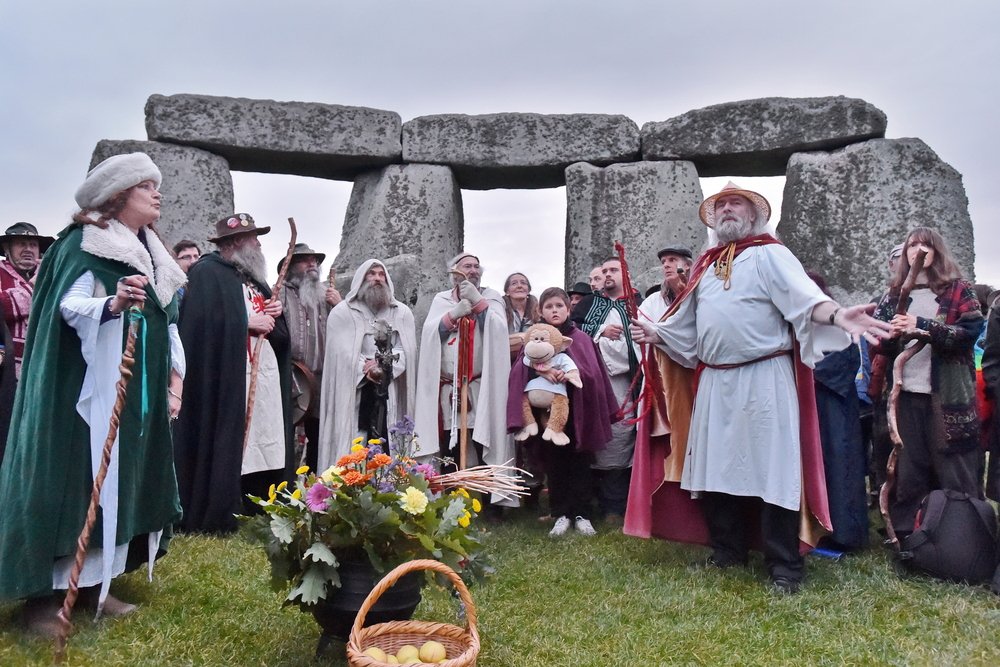
In total every year more than 10,000 people attend to spend the shortest night of the year at Stonehenge. Crowds gather to share food and drink, celebrate the summer and visit the stones. On a normal day, visitors to this prehistoric site are not allowed to touch the henge. However, on the solstice, the stone circle is fully opened up to the public, and attendees can touch the stones as much as they like – some even choose to climb on top of them! When the sun begins to rise in the morning the crowd falls silent, and everyone gathers together in awe to watch the ancient marvel take place. It is a sight to behold, and one of our country’s oldest traditions!
This year, the solstice sunset and sunrise will be livestreamed on English Heritage’s website, so you can join in the celebration wherever you are. Watch the livestream here.
Glossary:
hemisphere – a half of the earth, usually as divided into northern and southern halves by the equator.
align – place or arrange (things) in a line.
ritual – a religious or serious ceremony, using involving a set of actions which must happen in a set order.
pilgrimage – a journey of significant importance, normally to reach a special landmark.
to track – to follow the movements of something.
prehistoric – from the time before there were written records.
architecture – the art or practice of designing and constructing buildings.
structure – a building or other object constructed from several parts.
spiritual – relating to or affecting the human spirit or soul.
recite – say aloud.
flocking – lots of people going to one place at one time.