
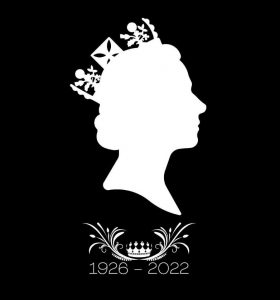
On this momentous occasion, the sad passing of Her Majesty Queen Elizabeth II, we would like to take time to reflect upon her dedicated and remarkable life and work, and the impact of her reign.
Queen Elizabeth II was born on the 21st of April 1926, in a house in central London. She was the first child of Albert and Elizabeth, the Duke and Duchess of York. Although Queen Elizabeth II will forever be remembered as a dedicated and impactful monarch, at the time of her birth, Elizabeth was not destined to be Queen.
In 1926, the reigning King was her Grandfather, George V. When King George V passed away in 1936, it was his eldest son (Queen Elizabeth II’s Uncle) Edward VIII who became King. However, his wife was a twice-divorced woman, and at the time this meant she was viewed as unsuitable for the position of Queen. Edward VIII decided to stand by his wife, and step down from the role of King within a year, abdicating the throne. This meant that Elizabeth’s father (George VI) unexpectedly became King in December 1936.
This change of events transformed a young Elizabeth’s destiny. At the age of 6 she had told friends and family that when she was older she dreamed of being ‘A country lady with lots of horses and dogs’, but now at the age of 10, she was destined to become the future Queen.
In her childhood she was educated at home and raised very close to her family. It is said that she had very a strong relationship with her father. She enjoyed studying history and languages and was reported to be a very intelligent and hard working young woman.
By the age of 18, during the 1940’s, Princess Elizabeth (known to close family and friends as Lilibet) had spent a lot of time with Prince Philip of Greece. She kept a picture of him in her room, and they exchanged regular letters – they had fallen in love.
During the 1940’s, the United Kingdom faced one of the most difficult chapters in the country’s history, the Second World War. Princess Elizabeth and her family worked hard to encourage British morale during this time, and the future Queen even joined the military by learning to drive and service lorries, so she could help with the war effort.
On the 8th of May 1945, the war ended on what is known as Victory in Europe Day. On this day, hundreds of thousands of happy Londoner’s took to the streets to celebrate, along with a hidden Princess Elizabeth. At 19 years old, and overwhelmed with joy, Princess Elizabeth and her sister Princess Margaret, snuck out of the palace and joined the crowds on the streets. Worried about being recognised by the hundreds of people gathered outside Buckingham Palace, Princess Elizabeth wore her military uniform so that she wouldn’t be noticed. She celebrated in the streets, and even danced the conga in the Ritz hotel!
By the time the war had ended, Princess Elizabeth and Prince Philip were ready to get married. On the 20th of November 1947 they were married at Westminster Abbey. Elizabeth gave birth to her first child, Charles, in 1948. She went on to have 3 more children (Anne, Andrew and Edward).
Sadly King George VI, suddenly became ill in 1951, suffering from lung cancer. During this time, the princess took over some of his royal duties, including tours to visit other countries around the world. It was during her visit to Kenya in February 1952 that she received the news that her father had passed away, making her Queen.
Her Coronation took place in June 1953. It was the first event of its kind to be televised. Some people, including Prime Minister Winston Churchill, were against the idea that the private Coronation ceremony should she shown on TV, however the Queen was determined to welcome a new age where the monarchy were more open and inclusive of the public. On the day of her Coronation, she committed herself to serving the British public, saying: “I have in sincerity pledged myself to your service, as so many of you are pledged to mine. Throughout all my life and with all my heart I shall strive to be worthy of your trust.”.
During the early years of her reign, the Queen visited many countries across the world. She became the first reigning monarch to visit Australia and New Zealand, spent a lot of time in Africa and visited many members of the Commonwealth, including India. She was the Queen and head of state of 15 countries other than the United Kingdom, stretching from Fiji to Canada. She was also head of the Commonwealth for all 70 years of her reign. The Commonwealth is a voluntary association of 54 member countries, whose population amasses to 2.1 billion people, a third of the planet’s population. The 1950’s and 1960’s were marked by many of these tours and royal engagements.
The 1960’s was a decade that shook Britain, with music, fashion and politics all changing very quickly. During this time, British attitudes to the monarchy began to change. In response to public pressure, the Queen evolved and began making changes to suit the new order. She requested that the ‘Monarchy’ now be referred to as the ‘Royal Family’, and even took part in a BBC television documentary welcoming the public into their private lives. This documentary was filmed in the 1960s, and showed the family cooking barbecues, decorating Christmas trees and going for long walks – demonstrating a more relaxed and relatable family by opening the doors to their private world. Through these efforts the Queen helped to restore the Royal Family’s popularity with the general public.
Throughout her reign, the Queen has worked with 15 Prime Ministers, all of which she met with regularly to receive updates and exchange advice. The political status of the United Kindgon has changed a great deal over the course of the last 70 years, however the Queen remained neutral, supportive and encouraging to all Prime Ministers. She has also faced many scandals and tragedies within her own family across the decades, but has retained balance and respect from her public.
In the 1980’s, the royal household was shaken by a frightening break in. A man named Michael Fagan managed to sneak into the grounds of Buckingham Palace, climb a drain pipe and enter the Queen’s bedroom where she was sleeping. Despite coming face-to-face with Fagan, the Queen was able to seek assistance from palace police and Fagan was arrested.
The 1990’s saw the end of apartheid rule in South Africa, and Nelson Mandela being made the country’s first black Prime Minister. Their first meeting took place in 1991, at a Commonwealth summit in Zimbabwe. Although not invited to the Queen’s banquet, Mandela requested he be allowed in. On hearing the request, the Queen quickly ordered that an extra place be set for him at the table, and that it should be close to her own seat. The Queen and Nelson Mandela formed a close relationship, and she later referred to him as a ‘Wonderful man’. Queen Elizabeth encouraged equality throughout her reign, once stating: “Everyone is our neighbor; no matter what race, creed, or color.”.
In 2002 the Queen celebrated her Golden Jubilee, meaning she had been on the throne for 50 years. The nation celebrated with street parties and events, music and carnivals. In 2011 the royal wedding of Prince William and Catherine Middleton helped to revive royal popularity and focus. On the 9th of September 2015 she became the longest reigning monarch in British history. Previously this record had been held by her great-great-grandmother, Queen Victoria.
Throughout her later life she spent more time in her homes across the U.K, including Windsor and Balmoral. At these homes she famously enjoyed taking care of her horses, and long walks in the countryside. One famous story from her former Protection Officer, Richard Griffin, explains how American tourists walking in the Scottish countryside encountered the Queen and Mr Griffin, but did not recognise who she was. The tourists promptly asked the Queen and her escort if they had ever met the Queen in person, knowing that she spent a lot of time in that area. Quickly, the Queen replied that she had never met her, but Richard had spent a lot of time with her. The tourists then passed the Queen their camera, and asked her to take some snapshots of them with the man who had met the queen! She was known by those close to her to have a brilliant sense of humor, and a sharp wit.
She celebrated her 90th birthday in April 2016, and continued her royal duties, attending events and meeting with politicians regularly. Although she refrained from sharing her own political beliefs, she used her experience to share her knowledge on the skill of leadership. She once told leaders: “Over the years I have observed that some attributes of leadership are universal, and are often about finding ways of encouraging people to combine their efforts, their talents, their insights, their enthusiasm and their inspiration, to work together.”.
During the Covid-19 pandemic she took to the television screens to unite and inspire the nation. In a moving speech, she stated: “We should take comfort that while we may have more still to endure, better days will return: We will be with our friends again; we will be with our families again; we will meet again.”.
As the nation slowly recovered from the Covid-19 pandemic, sadly, in April 2021 her husband Prince Philip passed away. They had been married for an astonishing 73 years. She remembered him through multiple statements and speeches, including saying that: “his sense of service, intellectual curiosity, and capacity to squeeze fun out of any situation were all irrepressible… That mischievous, enquiring twinkle was as bright at the end as when I first set eyes on him.”.
Famously, every year she produced a Christmas speech which was broadcast around the globe on Christmas Day. The speeches reflected on the past year, and looked ahead to what the future held. Her most recent speech, in 2021, was one of the most viewed televisions events of the year, with more than nine million people tuning in to watch. She encouraged the nation to focus on the positives, saying that: “Christmas can speak to the child within us all. Adults, when weighed down with worries, sometimes fail to see the joy in simple things, where children do not.”.
She continued to work throughout the final year of her life, meeting officially with the 15th Prime Minister of her reign, Liz Truss, for the first time only 2 days before she passed away.
On the 8th of Septemeber 2022 the sad news was announced that the Queen had passed away peacefully in her home in Balmoral, Scotland, at age 96. Her family gathered at the home, as leaders and members of the public from across the globe joined together in paying their respects.
She will forever be remembered as a dutiful and diligent Queen, who dedicated herself to a life of service. For many, she formed a connection to an earlier time and had provided stability for a nation which has changed dramatically during the course of her reign. Her hard work and loyalty to the British public, as well as to the other nations she lead and inspired, will be honored for generations to come. She has represented her country with confidence, tact and wisdom for 70 years, encouraging the people of the U.K, the Commonwealth and the globe to come together in order to achieve a brighter future, and always keeping the promise made on her 21st birthday: “I declare before you all that my whole life whether it be long or short shall be devoted to your service.”.
Glossary:
Monarch: A head of state e.g a King, Queen or Emperor
Monarchy: A form of government with a King or Queen at the head.
Reign: The period of time that a King or Queen is ruling for.
Abdicate: To give up the responsibility of being King or Queen.
Morale: Confidence and enthusiasm of a group of people.
Coronation: The ceremony where a King or Queen is officially given their new role.
Jubilee: An anniversary, usually for the length of time a King or Queen has been ruling.
Throne: The official chair on which a King or Queen sits.
On the throne: Can refer to the length of time a King or Queen has been ruling.
Summit: An important meeting between heads of government.