Skip to content
International House London

Main Menu

  • About Us
    • About Us
    • Vision Mission Values
    • Locations
    • Accommodation
    • Become a Host
    • Social Programme
    • Facilities – Virtual Tour
    • Governance
    • Meet our Leadership Team
    • Meet our Sales Team
    • Board of Trustees
    • Careers

    Why learn with us?

    International House London is no. 1 Language school in Central London, judged by the latest British Council inspections. We have been named best value school in London and we have been teaching for over 65 years. Change your life with IH London.

  • Learn English
  • Professional English
  • Foreign Languages
  • Young Learners
  • Teacher Training
  • Teacher Portal
  • Exam Preparation
  • Exams
  • Contact us
  • Useful Links
    • Policies
    • Accreditations - inspection
    • Brochures & Factsheets
    • Study Welfare
    • Information for under 18s
    • Getting a VISA
    • Terms and Conditions
    • Careers
    • ETO Hub
    • Price List
    • YL Insurance
    • Bildungsurlaub

Home › Blog › Foreign Languages ›5 Things You Didn’t Know About The Arabic Language

5 Things You Didn’t Know About The Arabic Language

July 2, 2021April 21, 2022

by Ted Curtis

Arabic is the official language in 25 countries and spoken by over 300 million people worldwide, making it the 5th most spoken language in the world. The Arabic language is becoming more and more in-demand for career incentives as it’s one of the 6 official UN languages and highly sought-after by employers. On top of that, the Arabic-speaking world is vast, diverse and unique and learning the language is the pathway to fully immersing yourself into the culture. Studying Arabic is a unique experience and extremely different to learning any other language. In this blog, we will shed light on some fascinating facts about the language and show you why Arabic is the language to learn in 2021.


Did you know that Arabic…


… is at least 1,500 years old.
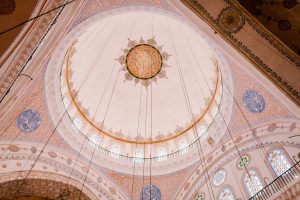
Yes, you read that correctly! Arabic is an historic language with a vast heritage and complex origin. The oldest recorded Arabic that we have today dates back to the 6th Century, but amazingly even older variants existed before the emergence of Islam, such as the Safaitic dialect spoken in the Syro-Arabian desert during the 1st Century.


… doesn’t have an alphabet.

Arabic actually has an ‘abjad‘ system. What is an ‘abjad‘ system you say? Well, Arabic is formed of 28 letters, all of which are consonants, that are accompanied by vowels, which are noted as marks that can be added to the letter or even on top or underneath them. Each letter is written in four different forms for when it is isolated or at the beginning, middle and end of a word.


For example:

‘bā’ (B)

Isolated Form: ب
At Beginning of Word: بـ
In Middle of Word: ـبـ
At End of Word: ـب


… is written from right to left.

Unlike English, Arabic is written from right to left with beautiful cursive writing. Beware: numbers are actually written from left to right, like واحد و عشرون (wāḫed wa-’ishrun = 21), إثنان وعشرون (iṯnāne wa-’ishrun = 22) and so on. It might take some getting used to and thorough practice, but who doesn’t love a challenge?


… includes sounds not found in other languages.

Arabic possesses tons of unique sounds which don’t have an equivalent in any other language, such as ‘haa‘ (ح), ‘kha‘ (خ), ‘ayn‘ (ع), and ‘ghain‘ (غ) which are all pronounced from the throat. Similarly, there are other emphatic consonants pronounced deeper and harder within the throat, like ‘dad‘ (ض), ‘taa‘ (ط) and ‘qaf‘ (ق) to name but a few. When learning Arabic, you will have to teach yourself how to adapt your voice and utilise parts of your mouth and throat that you may never have used before… how exciting!


… has a root system.

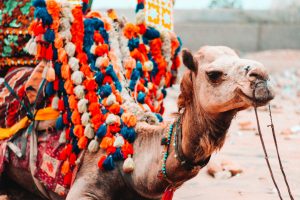
The key to mastering Arabic is becoming familiar with the roots. Every noun, adjective, and verb is built on a root system of 3 key letters, which change with added consonants and vowels. For instance, ‘k-t-b’ (كَتَبَ) carries the meaning of ‘writing’, and various words derive from this same root, like كَاتِب (kātib = writer), كِتَاب (kitāb = book), مَكْتَبَة (maktaba = library) and مَكْتَب (maktab = office/desk). Perhaps this explains why there are many more words in Arabic than in any other language. Linguists estimate that there could be up to a whopping 5,000,000 words in Arabic. To put that in perspective, English only has about 600,000! No wonder there are over 100 words for camel alone…


Feel inspired to take on the Arabic language? Find out more and sign up to one of our upcoming online or face-to-face Modern Standard Arabic classes here.

Categories RSS

  • Accommodation (7)
  • Discover Cambridge (1)
  • Discover London (108)
  • Events (156)
  • Exams (5)
  • Foreign Languages (250)
  • IH London (66)
  • Learn English (101)
  • Learning resources (22)
  • News (210)
  • Specialist Language (13)
  • Teacher Training (99)
  • Uncategorized (94)
  • YoungLearners (21)

Most Read Articles

  • All about IELTS25th February 2014
  • Launch of Online Foreign Language Courses18th March 2020
  • Giving feedback on emerging language29th July 2014
  • Number of English language learners keeps on growing30th May 2014
  • Online Foreign Language Courses at IH London24th March 2020

Learn from our experts at IH London

We’d love for you to visit and learn with us. Explore our courses and if you’d like any help choosing a course, just let us know. 

Contact us

Useful links

  • Policies
  • Accreditations - inspection
  • Brochures & Factsheets
  • Study Welfare
  • Information for under 18s
  • Getting a VISA
  • Terms and Conditions
  • Careers
  • ETO Hub
  • Price List
  • YL Insurance
  • Bildungsurlaub
Internationl House London
  • tiktok
  • facebook
  • linkedin
  • youtube
  • instagram
  • wechat
  • Bildungsurlaub logo accreditation ihlondon-
International House Trust Limited (trading as International House London) is a company registered in England and Wales, company number 01239120, and a registered charity, No. 270860. Registered office: Haycraft House, 16 Stukeley Street, London, WC2B 5LQ. info@ihlondon.com. IH London is a member of English UK, the national association for English Language Teaching. Company no. 05120951.

© International House London 2026.

  • Terms and Conditions
  • Privacy and Cookies
  • Terms of use
  • Search